How has the newspaper industry maximised profits in response to technology change?
The first goal of a business id to make profit, and to do this businesses must adapt through the years to meet customer demands.
For decades, newspapers have dealt with small adjustments, but they are now at a point where major changes need to take place in order to remain competitive. The decline of newspapers have been debated. as the industry has faced slumping ad sales, the loss of much classified advertising and precipitous drops in circulation. Since the beginning of the internet, newspapers have asked themselves if they could provide a healthy stream of revenue, and if so, how it would be possible. There was no way to predict how fast technology would grow in recent decades. Even newspapers today fail to allocate enough resources to technology, thinking it will not deliver worthwhile results even though newspapers with web sites now see an increase in revenue from advertising as long as they deliver to large audiences other businesses seek to target. To survive, newspapers are considering combining and other options, although the outcome of such partnerships has been criticised.
Despite these problems, newspaper companies with significant brand value and which have published their work online have had a significant rise in viewership.
Monday, October 7, 2019

Monday, April 22, 2019
Tide Print Advert Analysis

layout and design
largest image placed left of centre - woman hugging tide box
overlaps other image to show importance
text and info surrounds it
'wordy' info in small text and to the side
text on top and bottom emphasises importance
images
the main image shows a 'modern' elite white woman hugging a Tide box, seeming very content
a secondary image is of two middle-class white women hanging their laundry talking about how good tide is
The advert is aimed at young/middle aged women who are middle class housewives. The main image is of a woman hugging the Tide washing powder, which would be seen as excessive and exaggerating to an audience today, but appealing and ideal for an audience in the 1950s. This is mainly due to the glamorous aspect of the woman, with a costume that'd be trendy for the time, shaped after Hollywood movie stars, as fashion and celebrities like Elizabeth Taylor and Marilyn Monroe were on the rise. All the images revolve around the traditional, middle-class, white woman ideal who looks similar to celebrities and people of importance due to the uprise of television and celebrity magazines. This suggests to women that you can be glamorous and do the domestic chores in the house, making Tide's main image an aspiration for its audience.
This advert uses a number of exclamation points and capital letters along with the bright red colour of the lexis and tagline of "TIDE'S GOT WHAT WOMEN WANT". It is informal and catchy due to the alliteration employed, making it marketable. Tide uses women to sell the product by the glamorised image, which is condemned by Van Zoonen's feminist theory as women are being objectified and mysogenized.
On the other hand, one could look at the advert as a less condescending but rather helpful one. Postwar American wealth meant money was actually available to buy products and Tide washing powder could have helped many women, hence the positive facial expression and the hugging.
KEY TEXT : Extended writing exam question
1.
Compare the representations of gender and ethnicity in this music video and the video for Dizzee Rascal’s Dream.
In your answer, you must consider:
· How representations of gender and ethnicity are constructed through selection and combination of elements of media language
· The similarities and differences in the representations of gender and ethnicity
· How far the representations relate to relevant contexts.
You should refer to Levi-Strauss ( binary oppositions), Barthes ( semiotics), Gauntlett
( identity theory ) and Gilroy ( postcolonialism ) in your answer as well as any other relevant theory
You should refer to Levi-Strauss ( binary oppositions), Barthes ( semiotics), Gauntlett
( identity theory ) and Gilroy ( postcolonialism ) in your answer as well as any other relevant theory
[30]
Beyoncé
I thought Beyonce’s video was very pro-female, pro-gay, and I wanted to stand up and wave my little girl power/feminist flag.
I like the idea of the setting in the middle of nowhere/everywhere, with women of different backgrounds (whites and other nationalities of color were represented here, not just black), wearing different colors, dancing together in their high heels. Yes, these women are objectifying themselves to a certain extent by wearing revealing clothing, but I felt that Beyonce and the rest of them women were taking control of their sexuality as a way to navigate themselves through the world.
As much as I enjoyed this video, Critically, though, that asks the question: yes these women are beautiful, in unison, wearing their high-heeled boots and embracing who they are, but is this the only way for women in the 21st century to navigate themselves through the world? While I think this is representative of some women, it doesn’t represent all women. Not at all of us can look like Beyonce.
One more thing, I like how this idea of “Girl Power” videos changed from that pink/bubbly girl group stuff of the 90s/00s, to how it’s taken on a more masculine, aggressive aesthetic.
I like the idea of the setting in the middle of nowhere/everywhere, with women of different backgrounds (whites and other nationalities of color were represented here, not just black), wearing different colors, dancing together in their high heels. Yes, these women are objectifying themselves to a certain extent by wearing revealing clothing, but I felt that Beyonce and the rest of them women were taking control of their sexuality as a way to navigate themselves through the world.
As much as I enjoyed this video, Critically, though, that asks the question: yes these women are beautiful, in unison, wearing their high-heeled boots and embracing who they are, but is this the only way for women in the 21st century to navigate themselves through the world? While I think this is representative of some women, it doesn’t represent all women. Not at all of us can look like Beyonce.
One more thing, I like how this idea of “Girl Power” videos changed from that pink/bubbly girl group stuff of the 90s/00s, to how it’s taken on a more masculine, aggressive aesthetic.
Dizzee Rascal
theories of ethnicities and postcolonial theory - GilroyThe construction the white matriarchal children's TV presenter and the young black male 'rascal' is interesting to explore in ration to postcolonial theory, especially in the social and historical context of the 1950s and increasing ethnic diversity in Britain. The narrative embeds positive messages and values, constructing a representation of a successful rapper and subverting negative stereotypes of ethnicity. However, the female can be seen in control, especially ad Dizzee Rascal is diminutive.
Dizzee Rascal is constructed as a rebellious young black male through the dress codes of red tracksuit with a 'hoodie' top and trainers. he appears to be a stereotypical defiant youth who challenges authority at the beginning of the video, reinforced by the lyrics "reckless with no shame".
As the narrative progresses, a more positive representation of Dizzee is constructed as he describes his strong sense of purpose, hard work and achievement. following Dizzee's transformation, the youths also partake in the change towards the normalisation by having a more creative and less destructive behaviour establishing him as a role-model. this positive representation of a young black rapper challenges many negative stereotypes of this social group.
Brexit: live feed
Brexit: Theresa May says McDonnell wants to overturn will of British people – as it happened
His comments about the second referendum today show that what the Labour Party want to do is frustrate Brexit. They want to overturn the will of the British people. Parliament overwhelmingly gave the British people a vote. They voted to Leave. I think it’s a matter of trust in politicians that they actually deliver on Brexit for the British people.
Tuesday, November 27, 2018
Daily Mirror front cover analysis

Masthead: Daily Mirror
Plug: 7 killed in speeding tramp crash
Headline: it's president trump...
Sub-Headings: ----
Splash(Headline): what have they done?
Strapline: how trump triumphed... and what it means for you and the world
Jump Line: ---
Central Image: crying statue of liberty
the cover persuades the audience to buy the newspaper and follow the main story by using an eye-catching central image as the main feature and interesting, drawing headings that make the audience curious and intrigued.
it also uses news agenda such as the unexpectedness of the image and story to draw the audience in. it uses personalisation as it expresses the presidency of Trump as a negative thing, linking to its left wing audience. it talks about America as it is considered an elite nation and it has a high threshold in the American legacy. it also uses the proximity of it to draw in the shock of the audience.
It is owned by parent company Reach plc.
the Daily Mail is seen as Britain’s most right-wing newspaper. Britain’s most read newspaper is described by 44% of Brits as “very right-wing”, far ahead of any other paper. In total, 81% considered the paper to be right-wing to one degree or another.
Friday, October 19, 2018
cross platform advertising
Cross-platform advertising is the use of two or more media platforms such as TV ads, billboards a megazines to promote something (a product, person, even, etc.)
An example of this is when an artist comes out with a new single and promotes it on their social media (Twitter, Instagram, etc.) as well as doing an interview on TV where they are asked about it and is advertised by the program or host(s).
This can also be done on more than two platforms. Products are commonly advertised on numerous media platforms such as magazines, social media and billboards as well as television ads.
Cross-platform advertising is used by companies to broaden their customer volume by reaching more people over a span of platforms, each costumised to appeal the most to different groups of people.
This may be not always work depending on what is being advertised and where. For example, advertising an over 50’s event on social media like twitter or instagram might not be as effective as advertising it on newspapers or television. This is because the majority of the customers this even is aimed at do not use social media as much or at all. This means that the advertising platform needs to be customer oriented and specialised to a certain segment of the population.
Stefani Joanne Angelina Germanotta & the Lady Gaga persona
Lady Gaga's Changing Image

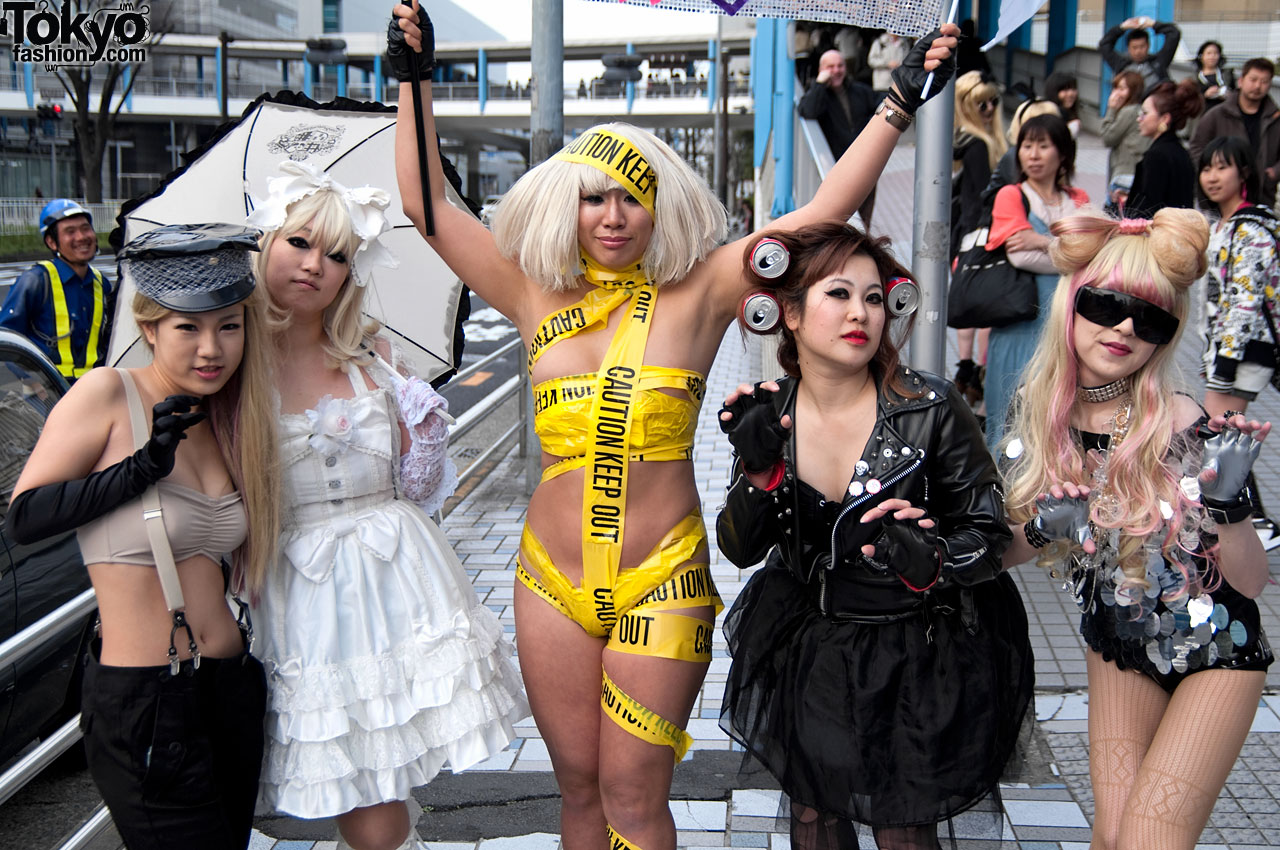
Gaga started to wear outrageous outfits to attract attention. An example is the dress made out of meat that she wore at the 2010 MTV Music Awards:


Richard Dyer's theory states that celebrities are made up different materials for marketing and financial purposes. He believes that celebrities create a different image of their true self so that they come across as normal people so a larger audience can relate to them.
Pop stars such as Lady Gaga are able to show their star persona's on social media. Social media allows the person to create a following and promote a specific ideology that they want to be seen as.Lady Gaga first became popular in 2008 when her single 'Just Dance' was released. The video for this did not suggest that such an extreme star persona was going to be created from this singer but her next popular singles 'Paparazzi' and 'Poker Face' began to show the image she was creating. From the videos following 'Just Dance' it was clear that Lady Gaga was trying to create a 'gaga' image of herself to make her more aesthetically appealing and make her stand out from the crowd.


As Lady Gaga has changed her appearance and persona, her audience have changed too. From the beginning, her audience was the generic pop audience demographic but this has slightly shifted over time. Even though the genre of her music has remained the same, her persona has meant that more of a individual audience are now interested in her music too. Her unique style attracts more of a unique audience. As her persona continues to change so will her audience. She is also able to be a leader to her fans, called the 'Little Monsters'.
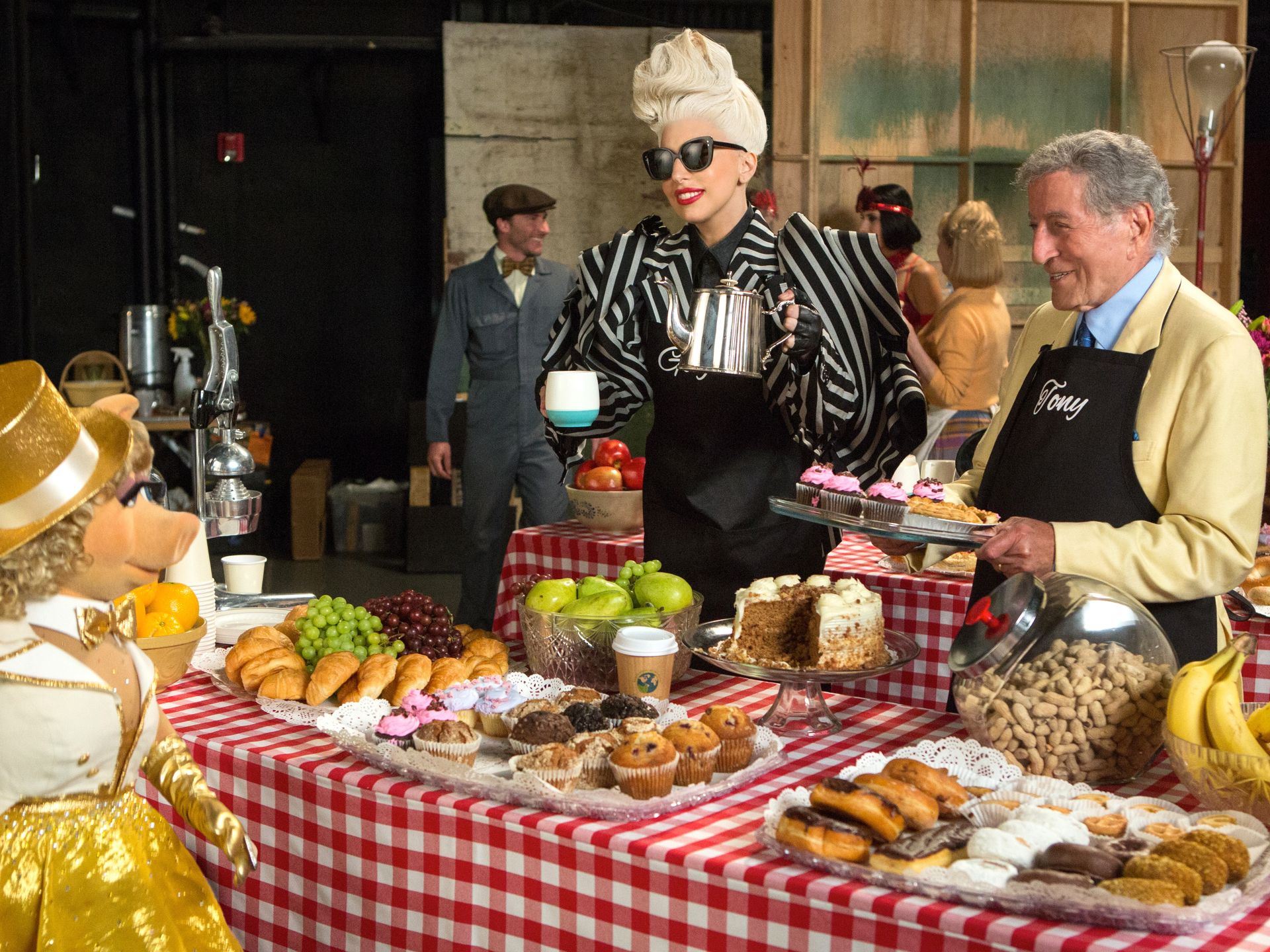
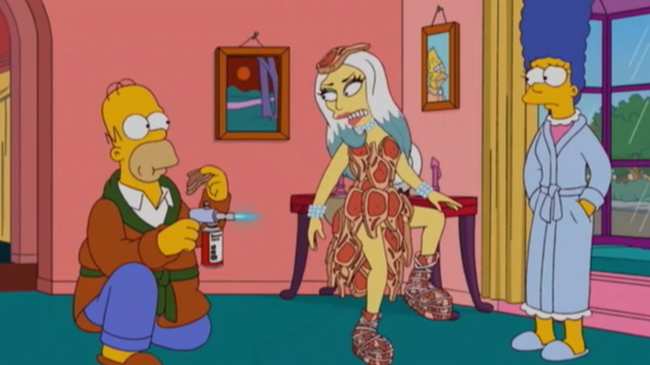
Every actor has a first notable on-screen appearance, and for Stefani Germanotta, that was the meaty role of “Girl at Swimming Pool #2,” featured in “The Sopranos” and “The Telltale Moozadell”. The 15-year-old future Mother Monster doesn’t even get a full line of dialogue in the scene, and it’s hardly an indicator of what was to come for one of the world’s biggest pop stars. IMDb credits her with nearly 40 appearances as an actor, but the majority of these are tied to her music career and Gaga persona, including cameos in “Muppets Most Wanted” and “The Simpsons.” Which is understandable when you’re a performer releasing studio albums and touring constantly, but also a bit odd, given that she’s on the verge of becoming an Oscar-nominated actress for “A Star is Born.”

Subscribe to:
Posts (Atom)